
Root and Wings: Featuring Tim Deaton-Conway
One of my hopes for Roots and Wings is that it serves as more than a place for just my own reflections, but also as a place where we can elevate rural voices and perspectives from people who know their communities intimately and love them deeply.
Today's piece is a portion of a speech that my friend Tim Deaton-Conway, Executive Director of the Appalachian Arts Alliance in Hazard, Kentucky delivered earlier this year.
I was in the room when Tim shared these remarks as leaders from across the country gathered in Hazard to learn from the community and the work happening there.
Tim’s affection for his place felt instantly familiar and his words have stayed with me. He reminds us to focus less on what rural communities lack and to look instead at what rural communities already possess: creativity, resilience, ingenuity, relationships, and an extraordinary capacity for building with what they have.
America’s Rural Future
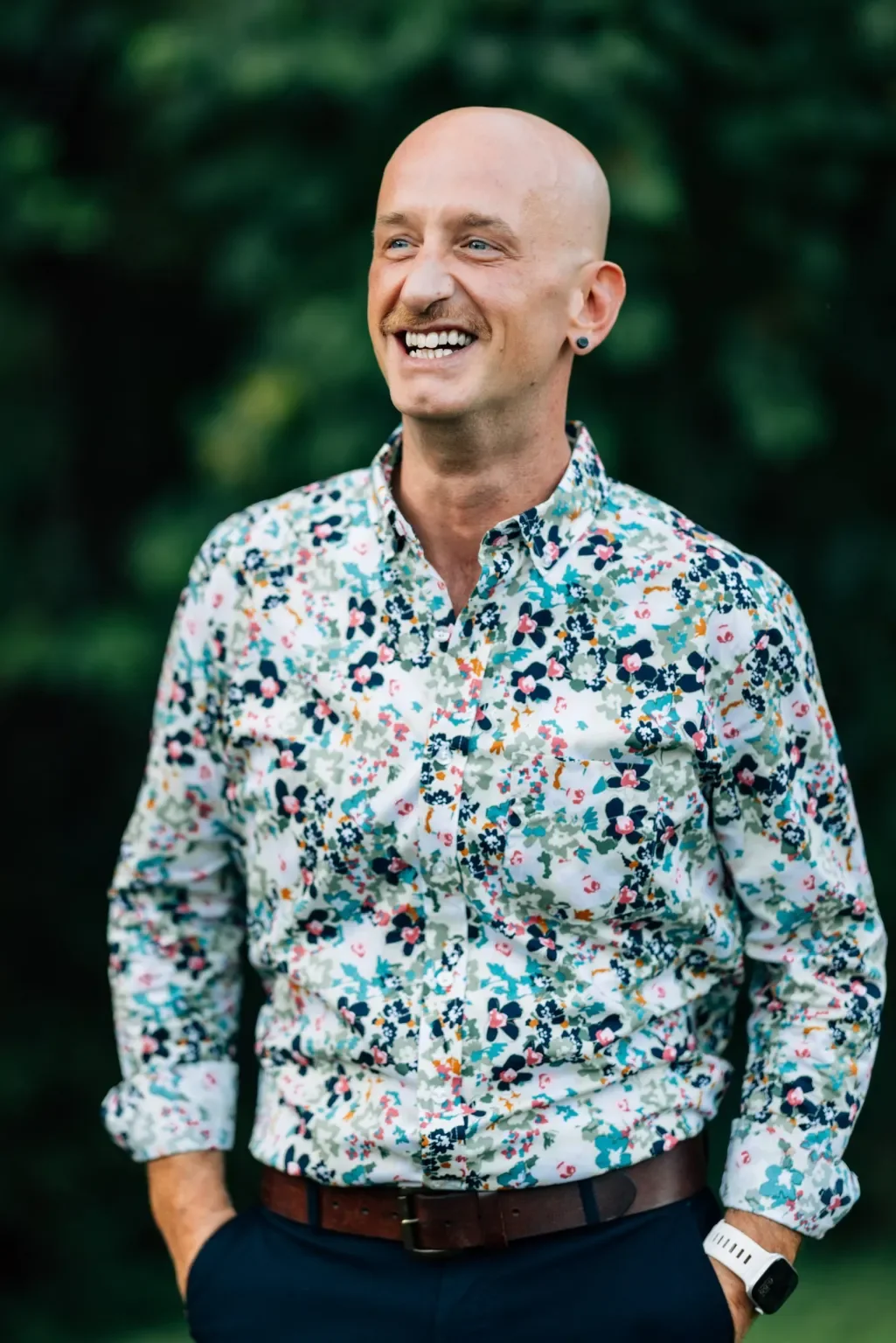
Tim Deaton-Conway is Executive Director of the Appalachian Arts Alliance in Hazard, Kentucky.
I think sometimes people arrive in places like ours carrying one of two Appalachias in their minds. One is the version they've been fed through headlines and statistics, a place defined by decline, extraction, addiction, poverty, or loss. The other—my Appalachia—is the one you discover only when you sit at our tables, walk our streets, hear our music, and meet our people. My Appalachia is inventive. Resourceful. Creative. Fiercely connected. And joyful.
The Appalachian Arts Alliance was founded after a community visioning process here in Hazard revealed something surprisingly simple: people wanted arts access, arts education, and spaces for creativity.
People here understood instinctively that communities without creativity eventually lose more than culture. They lose imagination. They lose gathering spaces. They lose opportunities for young people to see themselves as builders of the future. And they lose hope!
So, this organization began humbly.
Volunteer-driven. Community-led. A collection of people who believed rural communities deserved beauty and opportunity, too.
Then came the ArtStation. A former bus station in downtown Hazard transformed into a center for arts, education, performance, and community life. For decades, bus stations in towns like ours symbolized departure. People leaving in search of possibilities elsewhere.
Now this building has become a place where people gather to imagine possibilities right here.
Since opening, this space has become part classroom, part performance hall, part community center, part laboratory for rural imagination. Children take music lessons. Community theatre fills the building with energy. Artists exhibit work. Families gather. And people who may never have thought of themselves as artists suddenly find themselves creating something. And that changes people.
One of the most meaningful examples of that is the Healing Tree. The Healing Tree is not simply an art installation. It is a community act of remembrance and restoration. It tells a story that many Appalachian communities understand deeply: healing is not individual here. It is collective. In rural places, grief belongs to everybody. But so does resilience.
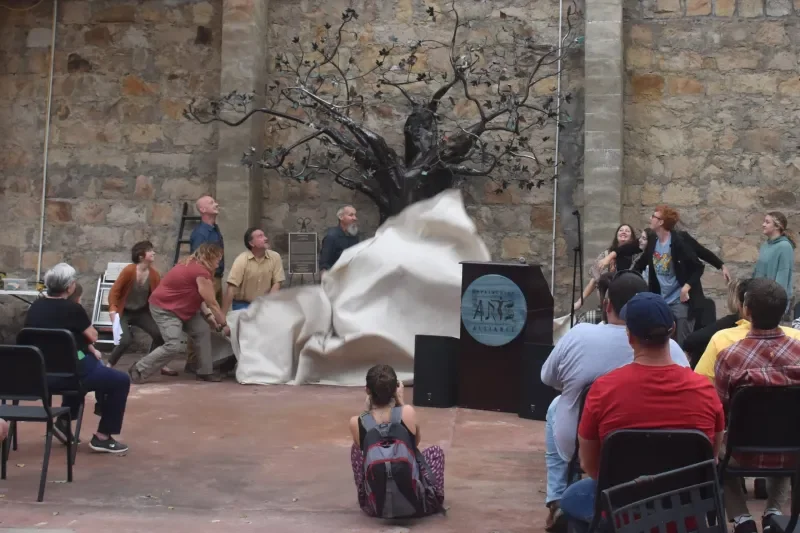
The Healing Tree sculpture was officially unveiled to the public in Hazard, Kentucky, on October 5, 2023. It is located in the courtyard of the Art Station(612 Main Street), which is operated by the Appalachian Arts Alliance.
That spirit is why so many leaders across philanthropy, education, economic development, and rural innovation have become increasingly interested in work happening in communities like Hazard.
Underneath all of these efforts is a shared realization: The future of rural America will not be built solely through extractive economies or outside rescue narratives.
It will be built through investment in people, relationships, creativity, education, entrepreneurship, and local leadership. Real transformation is place-based.
And increasingly, there is recognition of something many rural communities have always known:
Creativity is infrastructure. Not decoration. Infrastructure. And infrastructure only matters if it can endure.
Too often, rural communities receive short bursts of attention, temporary programs, or one-time investments that disappear before real transformation can take root.
What communities like Hazard need are sustainable investments that will stay long enough for trust to grow, for young people to develop, for downtowns to recover, and for local ecosystems to strengthen themselves over time.
The economic decline did not happen in a three-year period, so why do we think it can be fixed in a three-year grant cycle?
Real rural revitalization cannot operate on emergency-room thinking!
It requires patient capital. Long-term partnership. Continued belief in the people already doing the work on the ground.
There is a question I am often asked when discussing rural America:
"How do we save rural communities?"
But I'm not sure that's the right question anymore. Maybe the better question is: "What can the rest of the country learn from rural communities?"
Rural communities like Hazard have spent generations adapting, collaborating, and creating with limited resources. We know how to innovate. We just haven't always called it that...
When neighbors share childcare, that's social infrastructure.
When artists turn abandoned buildings into gathering spaces, that's adaptive reuse.
When communities build partnerships across education, healthcare, nonprofits, business, and culture, that's systems thinking.
Rural America has been practicing collaborative survival for a very long time. Now the nation is beginning to recognize its value. The future of rural America cannot be designed entirely from boardrooms in Washington, New York, or Silicon Valley. It is being shaped in places like Hazard, Kentucky. Places where creativity is not abstract. It is practical. Economic. Human.
At the Appalachian Arts Alliance, we do produce concerts, theatre, murals, classes, and exhibitions. But beneath all of that, what we are really producing is possibility.
Possibility that young people can stay and thrive.
Possibility that downtowns can live again.
Possibility that rural communities can be creators of innovation, not merely recipients of aid.
And perhaps most importantly, the possibility that Appalachia can define itself rather than continually being defined by others.
Thank you for investing your curiosity and your attention in communities like ours. Thank you for helping build a future where rural America is not viewed as a relic of the past, but as one of the places where the future is already being written. We've been able to do all that we've done with minimal investments and resources.
Imagine what we could do with true, committed, sustainable investment.
Imagine what we could do.
Want to have your story or perspective shared with the Roots and Wings audience? Email me at dreama@dreamagentry.com