
Rethinking Readiness
Before we ask whether a rural place is ready, we may need to be clearer on what kind of partner we're ready to be.
I was talking yesterday with a funder working in a rural region. They are thinking about supporting a place-based partnership, or PBP, and asked me a familiar question:
How would we know whether this region is ready for a PBP?
I started answering the way I usually do. I thought about geography, trusted leaders, community alignment, a potential backbone, and whether there was a path to sustaining the work.
Our team at Partners for Rural Impact has been developing a toolkit around these questions that we will release soon. As we have worked on it, I have noticed myself becoming less and less interested in a simple readiness assessment.
Yesterday it clicked for me why. Before I can tell you whether a place is ready, I think I need to understand:
What level of readiness are you willing to invest in?
Some investors are looking for places that are essentially shovel-ready.
They need an established backbone organization, experienced leadership, a community plan, strong financial systems, data capacity, governance, relationships across sectors, and a clear implementation pathway. Their investment model assumes most of that infrastructure is already in place.
There are good reasons for that. An investment may have a short implementation window. Public dollars may carry significant compliance requirements. A funder may have limited capacity to accompany a community through a developmental process.
Other investors are willing to enter earlier.
They may see a real opportunity to improve outcomes while also seeing capacity that still needs to be built. Perhaps there is no backbone yet. Perhaps the community has never developed a shared plan. Perhaps the prospective backbone needs stronger financial systems, data capacity, grants management, staffing, or leadership.
For those investors, building some of that capacity can be part of the investment itself.
That means two investors could look at exactly the same rural community and reasonably come to different conclusions about whether it is ready.
The community has not changed; rather, what the investor is prepared to do has changed.
Readiness Has A History
The other part of the readiness conversation we cannot ignore is that places like rural Appalachia, where I’m from, have experienced generations of underinvestment.
Long-term underinvestment has consequences that negatively impact a community’s perceived readiness.
How much of what we are calling a readiness gap is actually the accumulated result of an investment gap?
If we consistently invest in places and organizations that already have sophisticated infrastructure, those organizations gain more capacity. They develop stronger track records and become increasingly capable of attracting and managing the next investment.
Places with thinner infrastructure, on the other hand, can experience the opposite pattern. Generations of underinvestment contribute to thinner and thinner capacity. And the cycle continues.
Union County helped me see this differently
When work began in Union County, South Carolina, it would not have looked shovel-ready for a place-based partnership. There was not yet a formal backbone for the work or a shared community plan.
But there was something to build from.
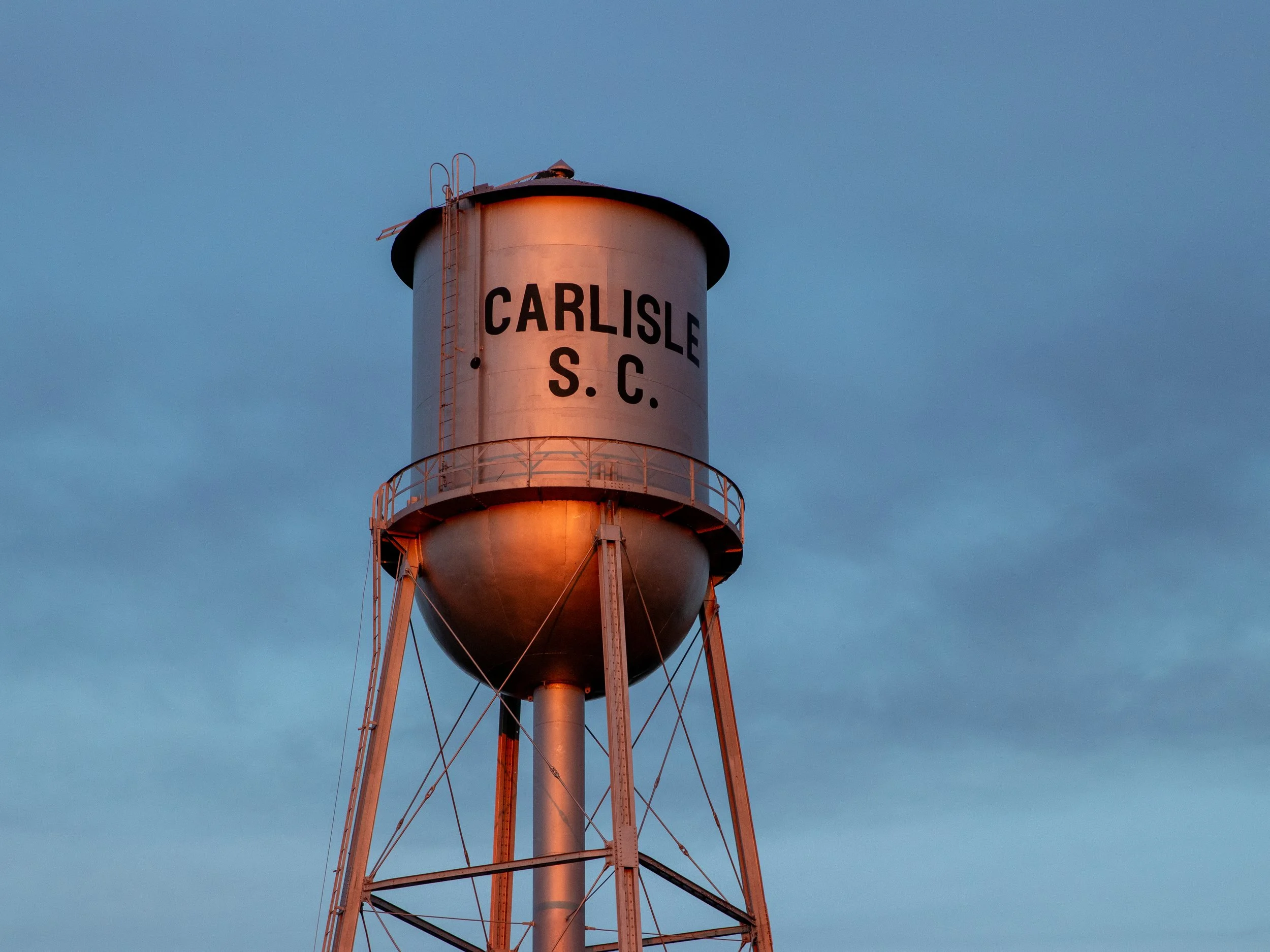
Union County is a rural county in South Carolina with a population of about 26,800 people.
NationSwell's Union County case study (linked below) describes a community with significant local assets but without the formalized infrastructure needed for major philanthropic dollars to reach systems-level work.
There were local leaders who cared deeply about the future of the county and schools and organizations rooted in the place. There were strong volunteer and informal networks.
And importantly, the partners around Union County were prepared to lean in.
The BlackRock Foundation was willing to invest in capacity and infrastructure. Spartanburg Academic Movement brought experience from a neighboring place-based partnership. United Way of the Piedmont brought organizational and regional capacity. PRI provided technical assistance and supported the community planning process.
The investment did not assume every condition for success was already in place; it helped create those conditions.
Today, Union Uplifted is a cradle-to-career partnership built around a shared plan for Union County's children and young people. It is anchored by Union County School District, United Way of the Piedmont, and Spartanburg Academic Movement, and the partnership now has its first dedicated leader.
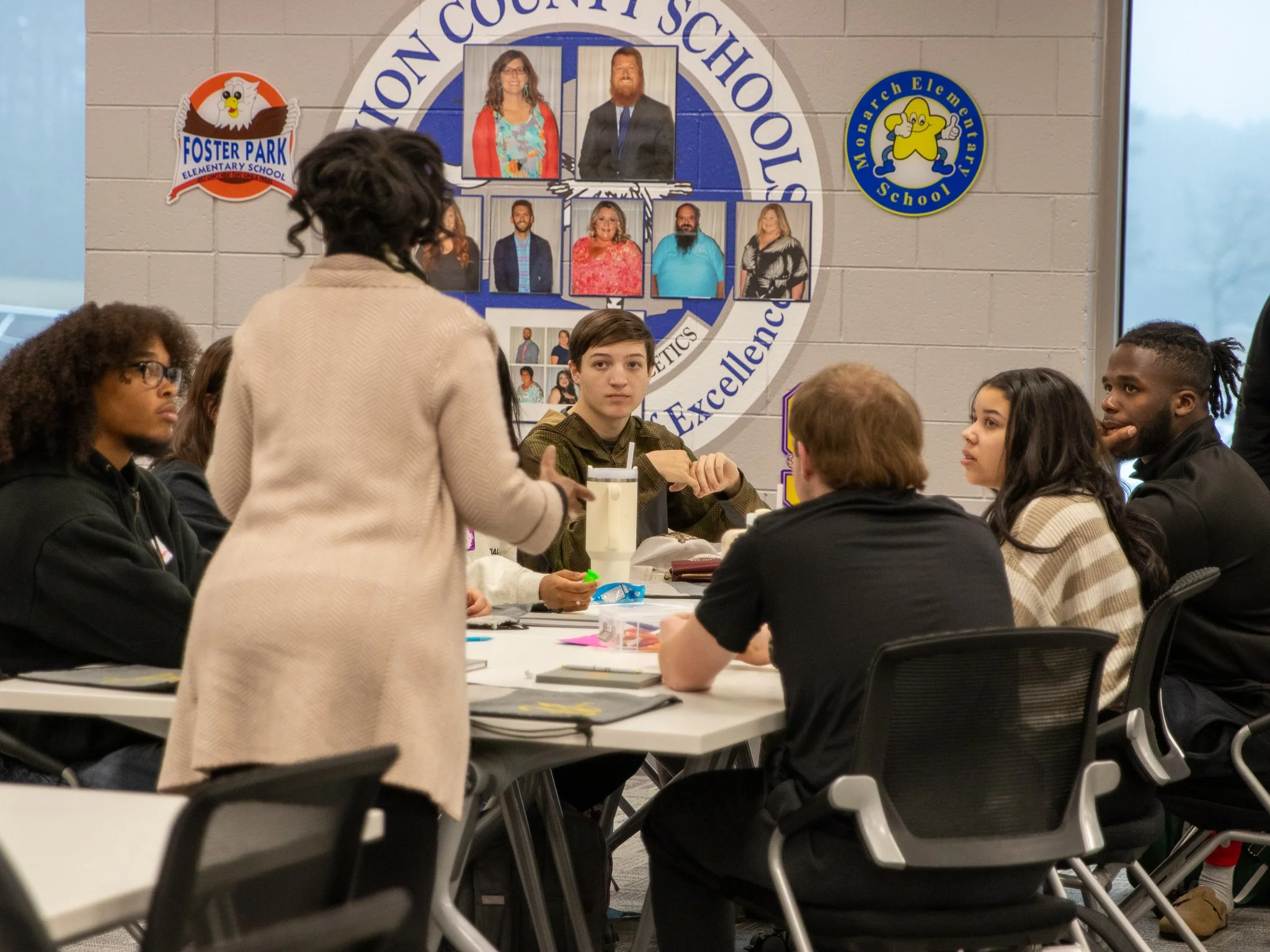
Union County, South Caroline is a rural county with a population of around 27,000.
I keep coming back to what might have happened if the only question had been:
Is Union County ready?
At one moment in time, the answer might reasonably have been no.
A more useful set of questions was:
What is already strong here? What needs to be built? And are we prepared to help build it?
There are shovel-ready partnerships across rural America. There are also communities with extraordinary leadership and tremendous potential where important pieces of capacity still need to be built. Most places fall somewhere in between.
That is why I think it helps to begin with a different conversation.
Are you looking for a community that is ready to implement immediately? Or are you looking for a community with strong local leadership and the willingness to build something together? Are you prepared to invest only in implementation, or also in planning, partnership, organizational capacity, and the conditions that make long-term success possible?
Being clear about those expectations from the beginning would save time, strengthen relationships, and help communities better understand whether an opportunity is truly the right fit.
There is nothing wrong with looking for shovel-ready opportunities. Some investments are designed to reward existing capacity while others can be designed to build it. Rural America needs both.
The question is whether we are clear about which kind of investment we are making—and whether we are willing to recognize that today's readiness is often the product of yesterday's investment.
Continue exploring...
The resources below provide additional context on Union County, place-based measurement, and the funder-side questions raised in this essay.
NationSwell: Union County, South Carolina case study + video
A Place-Based Impact in Practice case study on Union County and neighboring Spartanburg. The case explores rural investment, community voice, capacity creation, and how The BlackRock Foundation and local and regional partners supported the infrastructure needed for longer-term systems change.
View the Union County case study and video
NationSwell: Interactive funder assessment
A five-minute self-assessment for funders and changemakers to reflect on whether they are equipped for place-based work. It examines the investor's own roots and credibility in a place, long-term commitment, understanding of community needs, role in the ecosystem, willingness to build local capacity, approach to equitable intervention, and measurement.
Take the Place-Based Impact interactive assessment
NationSwell: The Principled Approach - Place-based Measurement Toolkit
A community-led, values-based measurement resource created through NationSwell's Place-Based Collaborative. It offers principles and examples for measuring place-based progress without flattening the history, context, and priorities that make each place distinct.
Explore the place-based measurement toolkit
Amy Lee: A principled approach to measurement can improve place-based impact outcomes
In this companion essay published by ImpactAlpha, NationSwell Chief Strategy Officer Amy Lee references the Union County work and PRI's Community Champion Strategy, including the engagement of local community champions and hundreds of Union County residents in shaping pathways for economic opportunity and growth.
Union Uplifted
The current home of Union County's cradle-to-career partnership, including information on its purpose, partners, and ongoing implementation.