Come Back to the Kitchen Table
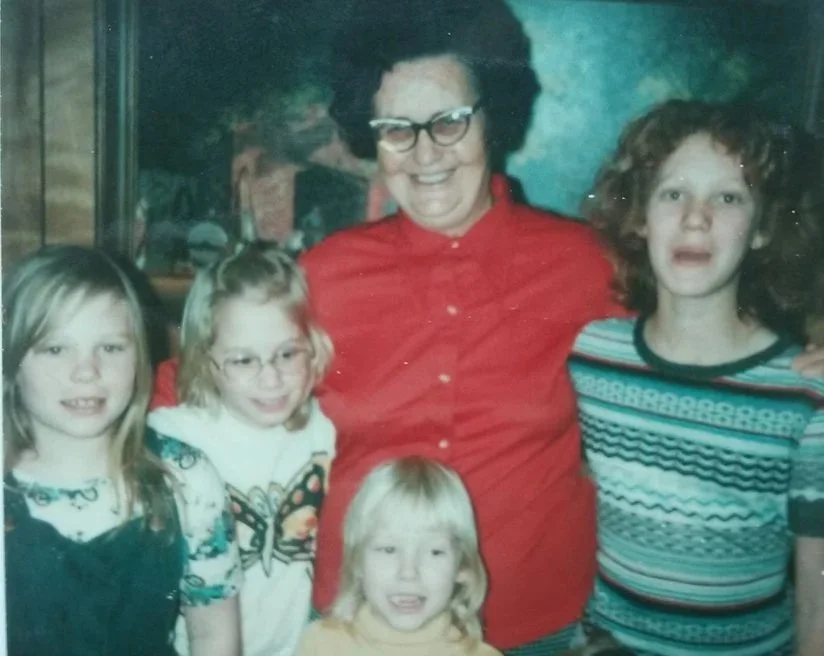
When I was growing up in Appalachia, the center of the universe was my grandmother Ma’s kitchen table.
Every afternoon after school I would step off the yellow school bus and walk straight to her little trailer. She would be waiting with snacks and time—endless time—to listen.
I was painfully shy as a child. Speaking in class felt terrifying. Even talking with other kids could be hard. But something about sitting at Ma’s kitchen table was different.
There, I could be myself.
There, my voice mattered.
We talked about everything—my dreams, my fears, what I was learning in school, and what I hoped to become.
It was the closeness I felt with my grandmother, the comfort of her kitchen table and the feeling of truly being seen and heard that helped me find my voice.
What the Kitchen Table Teaches
Are we able to truly see and hear the communities we hope to serve in boardrooms or in policy papers? Or would we be better off beginning our work around kitchen tables?
It’s at home where people feel most comfortable and tell the truth. It’s gathered around a familiar table where neighbors talk honestly about what keeps them up at night. It’s over simple homecooked meals where families wrestle with hard realities and imagine better futures for their children.
Most importantly, kitchen tables are where people remember something we sometimes forget in public conversations: Our children are not problems to be solved. They are our babies. And they deserve our very best.
The Lesson From Leslie County
Years ago, I had the privilege of working alongside leaders in Leslie County, Kentucky, to strengthen their school system. At the time, Leslie County High School ranked 224th out of 230 schools in the state.
When outsiders looked at the community, they saw poverty and isolation. They saw deficits and many, many problems to be solved.
But when we sat down with families and educators around their own kitchen tables, we found something else:
Parents who loved their children fiercely.
Young people with dreams as big as any students anywhere.
A community determined to build a better future.
So we did what rural communities have always done. We kept gathering around the table and got to work. Together, local leaders, educators and families placed the needs of children at the center of every decision. They faced the hard data honestly. They implemented proven strategies, but were careful to adapt them to fit their community and culture.
Within four years, Leslie County High School rose from 224th to 16th in Kentucky!
Graduation rates climbed above 95 percent. ACT scores increased dramatically. Kindergarten readiness doubled. The numbers were impressive, of course, but the real transformation happened in relationships.
Families began showing up at school events because they felt welcomed. Teachers stayed late because they believed in what was possible and local young people, who now felt more seen and heard, returned to mentor the next generation.
Trust the People Closest to the Problem
The people closest to a problem are often closest to the solution. Like the bus driver who notices when a child boards the bus scared. Or a grandmother raising five grandchildren. Or a school secretary who knows which families are struggling.
These are experts, too. Our kitchen tables remind us to trust the wisdom that already exists within our communities.
The future of rural education will not be built by distant experts alone. It will be built by communities willing to sit down together, tell the truth, trust one another, and imagine something better for their children.
Do you have a kitchen table story?
Have you learned an important lesson about proximity? What would you ask a rural young person if you could sit down with them for a snack after school? I’d love to hear.